About
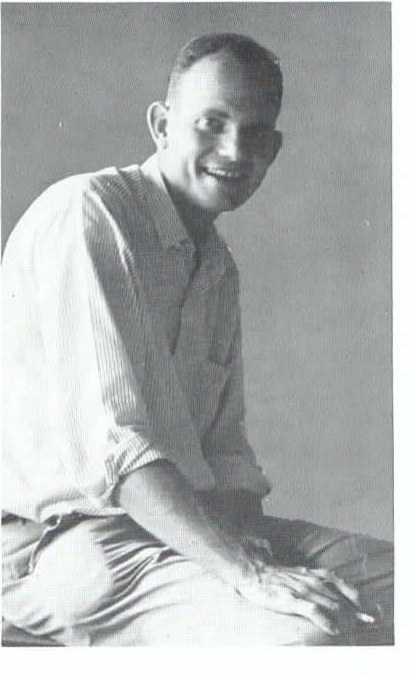
Frank Bunts (b. Cleveland, 1932) has made visual work for more than fifty years. His art is held in the public collections of the Philadelphia Museum of Art, the Cleveland Museum of Art, the Corcoran Gallery of Art, the Library of Congress (Print & Photograph Department), the Boise Art Museum, the Fine Arts Gallery of San Diego, and the Chinese Artist Association, Beijing. His work has appeared in 118 group exhibitions across thirty U.S. states and five countries, including showings at the San Francisco Museum of Art, the Baltimore Museum of Art, the Indianapolis Museum of Art, Christie's New York, and Yale University, and in galleries in New York, Chicago, Boston, Los Angeles, Washington, D.C., Cleveland, and Tokyo.
Bunts studied at Yale University and the Cleveland Institute of Art and earned his MA in Art from Case Western Reserve University. He directed the Graduate Studio Art Department at the University of Maryland and taught at the Cleveland Institute of Art and Arkansas State University. He is now director of the V.I.A. Art Foundation, which provides services to visual artists and teachers. Before his academic career, he served in the U.S. Army during the Cold War along the “Iron Curtain” in Germany, between the American and Russian occupation zones — a night train took him into Berlin before the Wall was built.
On the Work
Most of modern art attempts to confront, if not resolve, the paradox of suggesting spatial depth on a flat surface. Starting in 1960 — before the term “VR” was invented — Bunts became fascinated with depth perception created by the expressive manipulation of virtual space: our ability to directly experience the sensation of the open space surrounding us. That sensation arises when the same scene is seen from a slightly different angle by the left and right eye; the mind combines the two images without conscious effort, creating an awareness of open space between objects. This binocular experience, often taken for granted, is missing in traditional painting and drawing. Bunts used moiré interference patterns, generated from an essentially flat surface and mixed with painting, to create the illusion of a shift of perceived images from one eye to the other — the fascinating illusion of open space out of flatness. Even cave painters were sensitive to the desire for more than a flat surface, using wall irregularities to give relief to their work.
He later photographed and restructured ancient lines drawn by humans at a scale too large to be seen from earth, the point of view often defined by the shadow of the observing photo-plane within the image. In his current work, the Barricades — walls and barriers that often lose their purpose with the passage of time yet continue to be built — are repurposed, printed on large paper surfaces as though constructed of thin paper. Stripped of the material that gave them their divisive presence, their historical incentive is subverted; they speak instead to our continuing internal scars.
Art, of course, must rise above its explanations.
From the Archive
In a 1977 report to the John Simon Guggenheim Memorial Foundation, the art historian Marchal E. Landgren wrote that while a number of artists of the day explored interference phenomena, Bunts was, to his knowledge, the only one who had accomplished it on a plane surface: “The works have an elegance that makes them works of art.” The full report, along with other documents and photographs from six decades of work, can be found in the Archive series of the gallery.
For inquiries: frank@frankbunts.com